
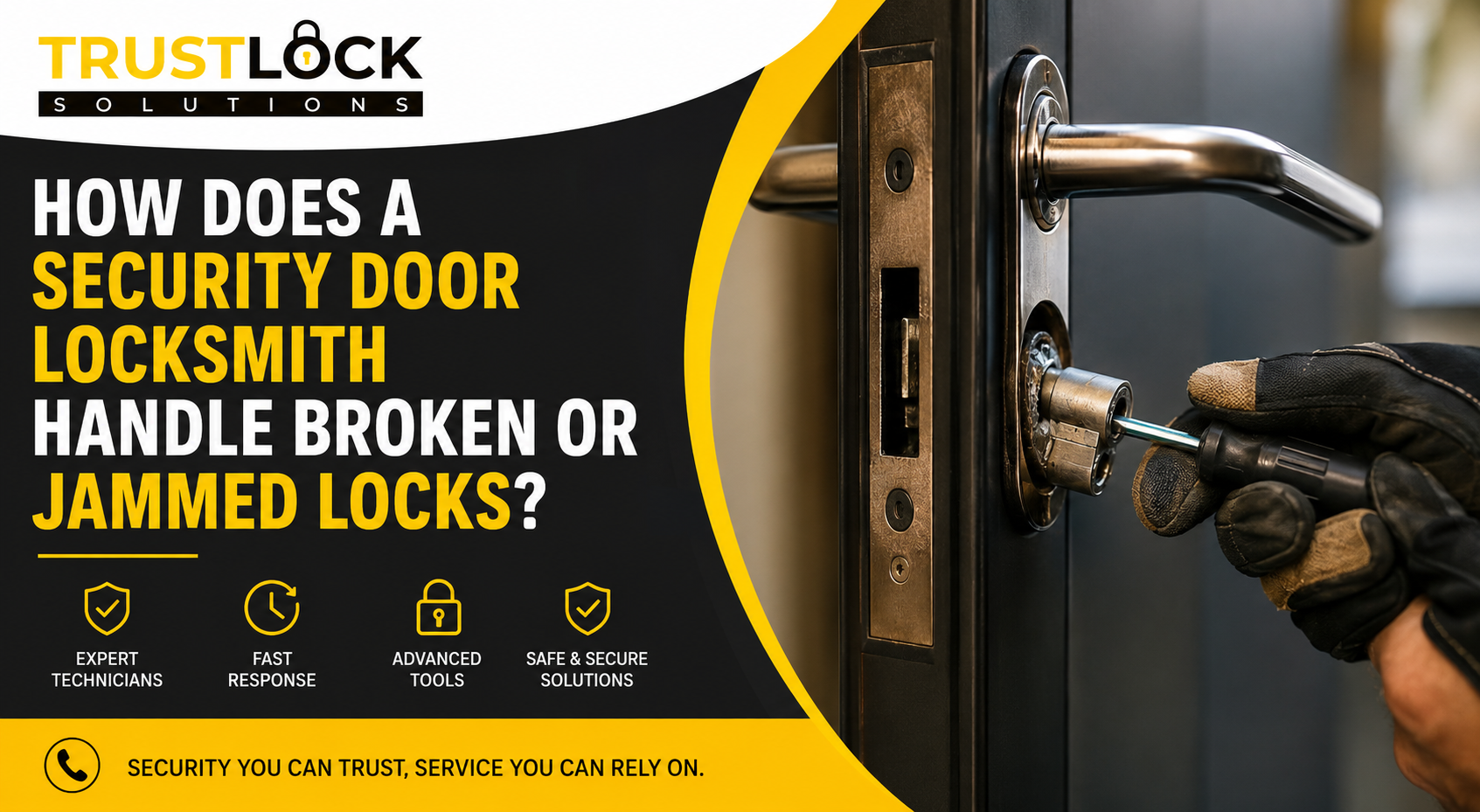
A broken or jammed security door lock can quickly become a stressful problem. You may be unable to enter your property, lock the door securely, or leave home without worrying about whether your belongings are protected. When a lock stops working, trying to force it open or attempting an unfamiliar DIY repair can make the situation worse.
A professional security door locksmith has the specialist tools and experience needed to identify why a lock has failed and determine the safest way to restore access. Depending on the problem, they may repair the existing mechanism, realign the door, replace a damaged component, or install a new lock when repair is no longer practical.
For homeowners and businesses in Medway and Kent, TrustLock Solutions provides professional locksmith assistance for lockouts, repairs, replacements, security upgrades, and other lock-related problems.
But what actually happens when a locksmith arrives at a property with a broken or jammed security door lock? Let’s look at the process in detail.
What Causes a Security Door Lock to Break or Jam?
Before fixing a lock, a locksmith needs to understand why it has stopped operating correctly. A jammed lock is not always caused by a single problem. Several issues can affect the lock, cylinder, handles, hinges, or door alignment.
Some of the most common causes include:
1. Worn or Damaged Lock Components
Locks contain several moving parts that experience regular use. Over time, springs, pins, levers, cylinders, and internal mechanisms can wear down.
A lock may initially become difficult to turn before eventually refusing to operate altogether. Continuing to force the key can potentially cause the key to snap inside the lock.
2. Misaligned Door
A door that has shifted slightly in its frame can place pressure on the locking mechanism. This is particularly common with doors that are frequently used or exposed to changes in temperature and humidity.
You might notice that the key turns more easily when the door is open but becomes difficult to turn when the door is closed. This can indicate an alignment problem rather than a completely failed lock.
3. Broken Key
A snapped key can prevent the lock from operating normally. If part of the key remains inside the cylinder, inserting another key may not be possible.
A locksmith can assess whether the broken key can be safely extracted without damaging the lock.
4. Faulty Lock Cylinder
The cylinder is the part of many locks where the key is inserted. Internal damage can cause the key to spin without engaging the locking mechanism or prevent it from turning at all.
If the cylinder has failed, replacing it may be more appropriate than replacing the entire door lock.
5. Dirt, Debris or Corrosion
Outdoor doors and security entrances can be exposed to moisture, dust, and other contaminants. Over time, these can affect the smooth operation of a lock.
However, applying random oils or household products is not always the best solution. Some products can attract dirt or interfere with the lock mechanism.
6. Attempted Forced Entry
Evidence of attempted forced entry can include damaged cylinders, bent components, marks around the lock, or a damaged door frame.
In this situation, simply getting the door open may not be enough. A locksmith should also assess whether the locking system remains secure.
What Does a Security Door Locksmith Do First?
When a locksmith arrives, the first step is usually to inspect the door and lock rather than immediately replacing or drilling the lock.
The locksmith will generally assess:
- The type and brand of lock
- The condition of the cylinder
- Whether the key is turning correctly
- The condition of the handles and locking mechanism
- Door and frame alignment
- Signs of damage or forced entry
- Whether the door is locked, unlocked, or partially engaged
- Whether the lock can be repaired or should be replaced
This initial inspection is important because the visible symptom does not always identify the actual cause.
For example, a key that will not turn could be caused by a damaged cylinder, pressure on the locking points, a misaligned door, or a problem with the internal mechanism.
Identifying the underlying problem allows the locksmith to choose an appropriate solution rather than replacing parts unnecessarily.
Can a Locksmith Open a Jammed Security Door Without Damaging It?
In many situations, a professional locksmith will first attempt a non-destructive method of gaining entry.
The exact approach depends on the type of lock, its condition, and the circumstances. A skilled locksmith understands that unnecessarily damaging a functioning lock can create additional costs for the property owner.
Non-destructive entry may be possible when the lock has not suffered severe internal damage and the door can be manipulated safely.
However, no reputable locksmith should promise that every lock can always be opened without damage. If a mechanism has completely failed, is severely damaged, or cannot be operated safely, controlled drilling or another appropriate method may sometimes be necessary.
Once access has been gained, the locksmith can usually replace the failed component or install a suitable new lock.
How Does a Locksmith Repair a Broken Lock?
The repair process depends on which part has failed.
Step 1: Diagnose the Problem
The locksmith identifies the type of lock and checks how it is behaving. They may test the key, cylinder, handles, locking points, and door alignment.
Step 2: Attempt a Suitable Repair
If the problem is minor, the locksmith may be able to adjust the door, repair a component, lubricate an appropriate mechanism, or correct an alignment issue.
Step 3: Replace Failed Components
If an individual component is damaged, it may be possible to replace that part rather than the entire locking system.
Step 4: Replace the Lock if Necessary
If the lock is badly damaged, worn out, obsolete, or no longer provides an appropriate level of security, replacement may be the better long-term option.
Step 5: Test the Door
After the work has been completed, the locksmith should test the lock and door several times to make sure the mechanism operates correctly.
The key should turn smoothly, the locking points should engage correctly, and the door should close without excessive pressure.
When Should a Jammed Lock Be Repaired Instead of Replaced?
Not every jammed lock needs to be replaced.
Repair can make sense when the underlying mechanism is still in good condition and the issue is caused by something relatively straightforward, such as alignment or a replaceable component.
Replacement may be more appropriate when:
- The lock is severely damaged
- The cylinder has failed
- The lock is excessively worn
- Replacement parts are unavailable
- The lock provides inadequate security
- The mechanism repeatedly jams
- There are signs of attempted forced entry
- The lock is outdated and a better security option is available
A professional locksmith can explain the available options and help you decide whether repair or replacement offers better value.
What Happens If the Key Is Stuck or Broken Inside the Lock?
A key stuck inside a security door lock can be particularly frustrating. Trying to pull it out using pliers or another household tool may push the key further into the cylinder or damage the lock.
A locksmith can inspect the position of the key and determine whether it can be extracted safely.
If the key has broken, the locksmith may also need to determine why it snapped. An old or damaged key may have weakened over time, but a difficult-to-turn lock can also place excessive stress on the key.
After extraction, the locksmith can test the cylinder and determine whether the lock itself requires attention.
How Do Locksmiths Deal With Misaligned Security Doors?
Sometimes the lock itself is not the main problem.
If a security door has dropped slightly, the locking points may no longer line up correctly with the keeps in the frame. This can make the key difficult to turn and may eventually cause damage to the lock.
A locksmith can inspect the door position and locking points to determine whether adjustment is required.
Correcting alignment can sometimes solve the problem without replacing the lock.
This is one reason it is important not to force a stiff key. If resistance is caused by door pressure, repeatedly forcing the key can damage the cylinder or break the key.
What If the Lock Has Been Damaged During a Break-In?
A damaged lock following a break-in or attempted break-in should be treated as a security issue, not simply an inconvenience.
A locksmith can assess the lock, cylinder, handles, door frame, and other relevant components. If the existing lock has been compromised, replacing it may be advisable even if it still appears to function.
Depending on the door and property, a locksmith may also recommend upgrading to a more suitable security lock.
The goal is not simply to make the key work again. The goal is to restore reliable access and appropriate security.
How Does a Locksmith Choose a Replacement Security Lock?
There is no single lock that is ideal for every property.
A locksmith will consider factors such as:
Door Type
Different doors require different locking solutions. The appropriate lock depends on the construction and existing hardware.
Security Requirements
A residential front door may have different security requirements from a commercial entrance, office, shop, or other high-use door.
Existing Hardware
The replacement needs to work correctly with the existing door, frame, handles, and locking points.
Usage
A door that is opened dozens of times each day may need a robust locking mechanism designed for frequent use.
Budget
A professional locksmith can usually provide options at different price points while explaining the differences in security, durability, and functionality.
The objective should be to choose a lock based on the property’s requirements rather than simply selecting the cheapest available option.
Why Should You Avoid Forcing a Jammed Security Door Lock?
When a lock refuses to turn, it can be tempting to apply more force.
This can create several problems.
A key can snap inside the cylinder. The cylinder itself can become damaged. Internal components can break. The door can also become more difficult to open.
If the door is already showing signs of resistance, stop forcing the key and arrange professional assistance.
This is especially important with security doors because their locking mechanisms can be more complex than basic internal door locks.
How Quickly Can an Emergency Locksmith Respond?
Response times depend on location, traffic, demand, time of day, and the nature of the emergency.
TrustLock Solutions states that it provides 24/7 emergency locksmith services and covers Medway and Kent. Its website also indicates an average emergency response time of approximately 15 to 30 minutes depending on location and traffic.
If you are locked outside your home or business, it is useful to explain the situation clearly when contacting a locksmith. Tell them whether the key is broken, the lock is jammed, the door is damaged, or you are unable to secure the property.
Providing these details can help the locksmith understand what equipment and replacement parts may be needed.
How Much Does It Cost to Fix a Broken or Jammed Lock?
There is no universal price for locksmith work because the cost depends on the problem and the solution required.
Factors that can affect the final price include:
- Type of lock
- Type of door
- Whether entry is required
- Time of day
- Emergency or planned service
- Whether the lock needs repair or replacement
- Cost of replacement components
- Complexity of the installation
- Location
TrustLock Solutions publishes locksmith pricing information and states that its residential locksmith services start from £45, while commercial locksmith services start from £70. Actual costs can vary depending on the specific work required.
It is sensible to ask for a clear quotation before work begins and confirm whether additional charges could apply.
What Should You Look for in a Security Door Locksmith?
Choosing the right locksmith is important because you are trusting them with the security of your property.
Look for a professional who:
Provides Clear Pricing
A reputable locksmith should explain the likely costs before beginning work wherever possible.
Has Relevant Experience
Security doors and modern locking systems can vary considerably. Experience with different lock types can help the locksmith diagnose problems efficiently.
Offers Emergency Assistance
If your security door jams at night or during a weekend, having access to an emergency locksmith can be valuable.
Explains Repair Options
You should understand whether the lock can be repaired, whether replacement is recommended, and why.
Prioritises Security
A good locksmith should focus on restoring both access and security rather than simply getting the door open.
TrustLock Solutions describes itself as a local locksmith serving Medway and Kent and offers residential, commercial, automotive, emergency, repair, replacement, and high-security lock services.
What Can You Do If Your Security Door Lock Starts Jamming?
If you notice that your lock is becoming difficult to operate, do not wait until it fails completely.
Instead:
- Stop forcing the key.
- Check whether the door is under pressure.
- Avoid using unsuitable household oils or tools.
- Do not attempt to dismantle the lock unless you understand the mechanism.
- Contact a qualified locksmith if the issue continues.
- Ask the locksmith to identify the underlying cause.
- Consider replacement if the lock is badly worn or unreliable.
Early attention can sometimes prevent a minor locking problem from becoming an emergency lockout.
Why Professional Locksmith Assistance Is Safer Than DIY Lock Repairs
Online videos can make lock repairs look straightforward, but security door mechanisms can be complicated. Using the wrong tool or technique can damage the lock, door, frame, or surrounding hardware.
A professional locksmith has experience diagnosing different types of failures and can determine whether non-destructive entry, adjustment, repair, component replacement, or complete lock replacement is appropriate.
Professional assistance is particularly valuable when:
- You are locked out
- A key has snapped
- The lock is completely jammed
- The door will not close securely
- The lock has been damaged
- You suspect an attempted break-in
- The lock repeatedly fails
- You need to upgrade your property’s security
The right solution is usually the one that addresses the cause of the problem rather than temporarily treating the symptom.
Frequently Asked Questions
1. Can a security door locksmith fix a jammed lock?
Yes. Depending on the cause, a locksmith may be able to repair the lock, adjust the door, replace a damaged component, or install a new lock. The appropriate solution depends on the condition and type of locking mechanism.
2. Can a locksmith open a broken security door lock without damaging the door?
In many cases, a locksmith will first attempt a non-destructive method. However, if the lock has completely failed or is severely damaged, some form of controlled lock damage may be necessary to gain entry.
3. Should I replace a lock that keeps jamming?
Repeated jamming can indicate that the lock is worn, damaged, or incorrectly aligned. A locksmith can inspect it and determine whether repair is worthwhile or replacement would provide a more reliable solution.
4. What should I do if my key breaks inside a security door lock?
Avoid pushing or twisting the broken key further. Do not try to force another key into the cylinder. Contact a locksmith who can assess the lock and attempt safe key extraction.
5. Why does my key turn when the door is open but not when it is closed?
This can indicate that the door or locking points are misaligned. Pressure from the door against the frame can make the locking mechanism difficult to operate. A locksmith can inspect and adjust the alignment.
6. Can a locksmith replace only the cylinder?
In many lock systems, cylinder replacement is possible without replacing every part of the door hardware. Whether this is suitable depends on the lock design and the condition of the rest of the mechanism.
7. How do I know whether my lock needs repair or replacement?
A locksmith can assess the condition of the mechanism and explain your options. Repair may be suitable for minor faults, while severe damage, repeated failures, outdated security, or unavailable replacement parts may make replacement more practical.
8. Are emergency locksmiths available outside normal working hours?
Some locksmith companies provide 24/7 emergency assistance. TrustLock Solutions states that it provides emergency locksmith services around the clock across Medway and Kent.
9. How can I prevent my security door lock from failing?
Avoid forcing stiff keys, address alignment problems early, keep keys in good condition, and have persistent locking problems inspected before the mechanism fails completely. Regular attention can help identify problems before they become emergencies.
Conclusion
A broken or jammed security door lock does not always mean that the entire lock needs to be replaced. The problem could be caused by a damaged cylinder, worn internal components, a broken key, door misalignment, debris, or another issue affecting the locking mechanism.
A professional security door locksmith starts by diagnosing the problem and then chooses the least disruptive appropriate solution. This may involve non-destructive entry, adjustment, repair, component replacement, or installation of a new security lock.
If you are dealing with a jammed or broken security door lock in Medway or Kent, TrustLock Solutions offers professional locksmith services, including emergency assistance, lock repair, replacement, and security solutions. Getting expert help can restore access while also ensuring that your door remains properly secured.
Need help with a broken or jammed security door lock? Contact TrustLock Solutions today for professional locksmith assistance and get your property secure again without unnecessary delay.