
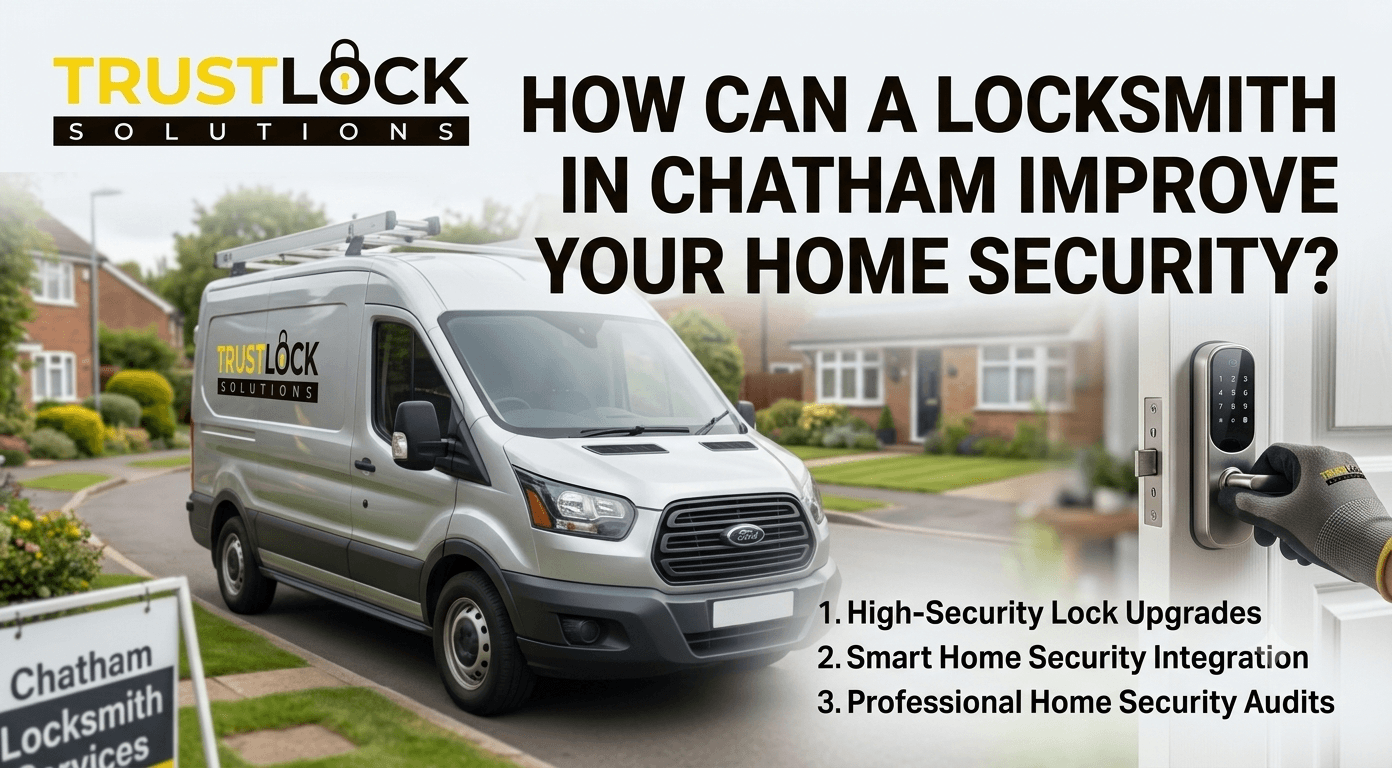
Home security is not only about having a lock on the front door. It is about creating multiple layers of protection that make it more difficult for an unauthorised person to enter your property. Doors, windows, locks, keys, access points, and even everyday habits can influence how secure your home really is.
For homeowners and landlords in Chatham, professional locksmith support can play an important role in identifying weaknesses that might otherwise go unnoticed. An experienced Locksmith in Chatham can inspect existing locks, recommend appropriate upgrades, replace worn or damaged hardware, and help make sure doors and windows are properly secured.
This is particularly important because locks can deteriorate over time. Older mechanisms may become difficult to operate, keys can go missing, previous occupants may still have copies, and some doors may be fitted with locks that no longer provide the level of protection you expect.
Working with a local specialist such as TrustLock Solutions can help you take a practical approach to protecting your property. Rather than simply replacing every lock, a locksmith can assess individual access points and recommend improvements based on the condition and type of your doors, windows, and existing security hardware.
Here is how professional locksmith services can contribute to stronger home security.
Why Is Home Security Important in Chatham?
Every home has different security requirements. A terraced house may have different access points from a detached property, flat, rental property, or older period home. The type and condition of the doors and windows also influence which security measures are suitable.
One of the most important principles of home security is making entry as difficult as reasonably possible.
A weak lock, poorly fitted door, damaged frame, or unsecured secondary entrance can reduce the effectiveness of other security measures. Even a high-quality lock cannot provide its intended protection if it is incorrectly installed or attached to a badly damaged door.
A professional locksmith can look at the property as a complete security system rather than concentrating on a single lock.
How Can a Locksmith in Chatham Improve Home Security?
A locksmith can improve home security by assessing vulnerable access points, upgrading unsuitable or outdated locks, repairing damaged mechanisms, replacing locks where key security has been compromised, and making sure security hardware is fitted correctly.
Professional locksmith assistance may include:
- Inspecting external door locks
- Replacing damaged or unreliable locks
- Installing appropriate security locks
- Improving patio and back door security
- Checking window locks
- Replacing locks after moving home
- Advising on key control
- Assessing door and frame condition
- Improving security following an attempted break-in
- Recommending suitable upgrades based on the property
The right solution depends on the home. This is why a professional security assessment can be more useful than simply purchasing a new lock without knowing whether it is suitable for the door.
1. Assessing the Security of Your Existing Locks
One of the first things a locksmith can do is inspect the locks you already have.
Homeowners sometimes assume that a lock is secure simply because it still works. However, functionality and security are not necessarily the same thing.
A lock may still turn with a key while showing signs of wear or being unsuitable for the door on which it has been installed. In other cases, the lock itself may be reasonable, but poor installation or deterioration around the door can create weaknesses.
A locksmith can examine factors such as:
- The type of lock
- General condition
- Signs of wear or damage
- How securely the lock is fitted
- Alignment between the lock and frame
- Door and frame condition
- Suitability for the property’s security needs
This inspection helps identify where improvements should be prioritised.
2. Replacing Old or Damaged Locks
Locks are mechanical devices and can wear with repeated use.
Common warning signs include a key becoming difficult to turn, a lock sticking regularly, loose components, difficulty locking or unlocking the door, visible corrosion, or a mechanism that feels unreliable.
Ignoring these symptoms can create both a security problem and an inconvenience. A deteriorating lock may eventually stop working altogether.
Professional lock replacement gives homeowners an opportunity to replace unreliable hardware with a suitable modern alternative.
A Locksmith in Chatham can identify the existing lock type and recommend an appropriate replacement rather than relying on guesswork.
3. Upgrading Your Front Door Security
The front door is one of the most important access points to any home, so it deserves particular attention.
Effective front door security depends on more than the lock alone. The door, frame, hinges, locking mechanism, and installation should work together.
Depending on the door type, a locksmith may recommend upgrading or replacing the existing locking system. Different doors require different solutions, so a lock that works well on one type of door may not be suitable for another.
A professional locksmith can inspect the complete door setup and determine whether the current hardware provides an appropriate level of security.
The goal should be to strengthen the entrance without making normal everyday access unnecessarily complicated.
4. Improving Back and Side Door Security
Front doors often receive the most attention, but secondary entrances should not be overlooked.
Back doors, side entrances, utility doors, garage access doors, and conservatory doors can all become security weaknesses if they are fitted with damaged or inadequate locks.
A security review should therefore include every practical entry point.
A locksmith can check whether secondary doors close properly, whether locks engage correctly, and whether the existing hardware is suitable for the particular door.
Improving these areas creates a more consistent level of security throughout the property.
5. Checking uPVC and Composite Door Locks
Many UK homes use uPVC or composite doors with multipoint locking systems.
These systems typically secure the door at several points when operated correctly. However, problems can develop with the lock mechanism, cylinder, handles, alignment, or other components.
If you need to lift the handle unusually hard, struggle to turn the key, or notice that the door is becoming difficult to lock, it is worth having the system inspected.
Continuing to force a problematic mechanism can potentially make the issue worse.
A locksmith familiar with uPVC and composite doors can diagnose whether the problem is related to alignment, the cylinder, the multipoint mechanism, or another component.
Correct diagnosis is important because replacing the wrong component can result in unnecessary cost without resolving the underlying issue.
6. Installing Suitable Lock Cylinders
For doors that use cylinder locks, choosing an appropriate cylinder is an important part of security.
Not all cylinders offer the same features or level of protection. A locksmith can explain the options available and recommend a cylinder that is appropriate for the door and locking system.
For some applications, homeowners may consider products that have been independently tested to recognised security standards.
The important point is to choose hardware based on compatibility, security requirements, and correct installation rather than appearance or price alone.
A professional locksmith can also ensure the cylinder is appropriately sized. Poor sizing or installation can reduce the effectiveness of otherwise good-quality hardware.
7. Securing Windows and Other Accessible Openings
Doors are not the only points that should be considered during a home security assessment.
Accessible windows can also require attention, particularly on the ground floor or in locations that are relatively easy to reach.
Depending on the window design, suitable locking hardware may improve security. Existing window locks should also be checked for damage or deterioration.
A locksmith can help determine whether current window security is adequate and identify hardware that may need repair or replacement.
Homeowners should also consider other potential access points such as garages, sheds, side gates, and connecting doors between garages and living areas.
The aim is to avoid leaving one noticeably weaker point in an otherwise well-secured property.
8. Replacing Locks When You Move Into a New Home
Moving into a new home is an ideal time to review security.
Even if the existing locks work perfectly, you may not know how many copies of the keys exist or who previously received them.
Previous owners, tenants, contractors, cleaners, relatives, neighbours, or other individuals may once have had legitimate access.
Replacing or rekeying suitable locks, where applicable, gives the new occupant greater control over who can enter the property.
A locksmith can identify which locks should be prioritised and advise whether complete replacement is necessary.
This simple step can provide greater confidence from the beginning of your time in the property.
9. Helping After Lost or Stolen Keys
Losing a key creates more than an inconvenience. Depending on the circumstances, it may create a security concern.
The appropriate response depends on what has been lost and whether the key could reasonably be connected to your property.
If there is a genuine possibility that an unauthorised person could identify and access your home, changing the relevant lock or cylinder may be sensible.
A local locksmith can assess the situation and explain the available options.
The objective is not always to replace every lock in the property. Instead, the locksmith can identify which access points have potentially been compromised and recommend proportionate action.
10. Improving Security After an Attempted Break-In
An attempted break-in can damage locks, doors, frames, handles, or other security components even when entry is unsuccessful.
Visible damage should be professionally assessed.
A locksmith can inspect affected locks and identify whether components need repair or replacement. They may also identify other weaknesses that should be addressed at the same time.
However, the lock should not be considered in isolation. If the door or frame has suffered significant structural damage, appropriate repair work may also be required.
Improving security after an incident should focus on restoring the entire entrance to a reliable condition.
11. Making Sure Locks Are Installed Correctly
Buying a good lock is only part of the process.
Correct installation matters.
A poorly installed lock can be difficult to operate and may fail to deliver the level of security its manufacturer intended. Incorrect positioning can also place unnecessary stress on the locking mechanism.
Professional installation helps ensure the lock is correctly aligned and compatible with the door.
A locksmith can also test the lock after installation to confirm that it operates smoothly.
For homeowners investing in security upgrades, professional installation helps ensure they receive the intended benefit from the hardware they have purchased.
12. Helping You Understand Security Standards
Lock terminology and security standards can be confusing for homeowners.
Depending on the product and application, you may encounter references to British Standards, security ratings, testing schemes, or insurance-related requirements.
A professional locksmith can explain these terms in practical language and help you identify suitable products.
For example, BS 3621 is a well-known British Standard associated with certain thief-resistant mechanically operated locks. Other products and door types may use different standards or certification schemes.
It is important not to assume that one standard applies to every door.
Homeowners should also check their own insurance policy because security requirements can vary between insurers and individual policies.
If a policy specifies particular locking requirements, make sure any replacement or upgrade is compatible with those conditions.
13. Providing Security Advice Based on Your Property
Generic security advice can be useful, but homes are not identical.
A professional locksmith can provide recommendations after seeing the actual property.
For example, one home might benefit most from replacing an ageing front door lock, while another may have a perfectly good front door but weak secondary entrances.
A property-specific assessment can help homeowners prioritise spending.
Instead of replacing everything, you can concentrate first on the most important weaknesses.
This is particularly useful if you are working within a budget and want to improve security gradually.
14. Helping With Key Control
Home security also depends on who has access to your keys.
Over time, homeowners may give spare keys to relatives, neighbours, cleaners, contractors, tenants, or other people. In some cases, it becomes difficult to remember exactly how many copies exist.
Good key management can reduce unnecessary security risks.
Consider keeping track of who has spare keys and avoid attaching information to a keyring that makes your home easy to identify.
When you no longer know who may possess copies of an important key, a locksmith can advise whether changing the relevant lock would be appropriate.
15. Improving Security Without Making Your Home Difficult to Use
Security should be practical.
An extremely complicated system that household members struggle to operate can create its own problems. The objective is to find a sensible balance between protection and everyday convenience.
A locksmith can recommend options based on how the household actually uses the property.
For example, families, landlords, older residents, and businesses operating from residential premises may have different access requirements.
Professional advice allows security measures to be tailored accordingly.
Why Choose a Local Locksmith in Chatham?
Working with a local locksmith can be useful because they can provide property-specific advice and practical assistance with locks and access points.
When choosing a locksmith, homeowners should consider experience, transparency, professionalism, and the clarity of the information provided.
Ask questions such as:
- What type of lock is being recommended?
- Why is replacement necessary?
- Are there alternatives to full replacement?
- Does the quoted price include the required work?
- Is the proposed lock appropriate for the door?
- Are relevant standards or certifications applicable?
- What maintenance does the lock require?
A professional should be able to explain the recommended work clearly rather than simply telling you that everything needs replacing.
TrustLock Solutions provides locksmith services for customers in Chatham and the wider Medway area, with a focus on practical security solutions and transparent service. Homeowners looking for further information about available services can visit TrustLock Solutions at trustlocksolutions.co.uk.
What Should a Professional Home Security Check Include?
A useful locksmith security assessment should look beyond the front door.
It can include external doors, secondary entrances, cylinders, multipoint locking systems, window locks, door alignment, key security, and signs of wear or damage.
The locksmith should then help distinguish between urgent problems and optional improvements.
This is valuable because not every older lock automatically requires replacement. If existing hardware is secure, functional, and appropriate, replacement may not be necessary.
Good security advice should focus on solving genuine weaknesses rather than recommending unnecessary work.
Simple Ways to Improve Home Security Alongside Better Locks
Professional locks are an important part of home security, but they work best as part of a broader approach.
Homeowners can also improve everyday security by keeping doors and accessible windows locked when appropriate, maintaining good exterior lighting, controlling spare keys carefully, and avoiding leaving obvious valuables visible from outside.
Other measures such as alarms, doorbells, cameras, or other security devices may complement physical security where appropriate.
However, electronic security should not be treated as a substitute for reliable physical locks and properly maintained doors.
The strongest approach usually combines good hardware, sensible habits, and appropriate technology.
When Should You Call a Locksmith?
You do not need to wait until you are locked out to contact a locksmith.
It may be worth arranging an inspection if:
- Your lock frequently sticks or jams
- Your key is becoming difficult to turn
- A lock or handle feels loose
- You have lost important keys
- You recently moved home
- You do not know who has spare keys
- Your door no longer closes or locks properly
- A lock has been damaged
- You have experienced an attempted break-in
- You want to review the security of an older property
Addressing minor problems early can prevent them from becoming more inconvenient later.
How Often Should Home Locks Be Reviewed?
There is no single replacement schedule that applies to every lock.
The lifespan of locking hardware depends on product quality, frequency of use, installation, exposure to weather, maintenance, and other factors.
Instead of replacing locks according to an arbitrary number of years, homeowners should pay attention to their condition and operation.
A security review can also make sense after major changes such as moving house, losing keys, changing occupants, completing renovations, or experiencing an attempted break-in.
The key principle is simple: locks should remain secure, suitable, and reliable.
Why Professional Locksmith Advice Can Be Worthwhile
DIY home security improvements can sometimes appear straightforward, but lock installation requires accuracy.
Incorrect measurements, unsuitable hardware, or poor alignment can cause problems and potentially compromise the effectiveness of a lock.
Professional locksmith support provides access to someone who can assess the complete situation before recommending a solution.
This can help avoid unnecessary replacement, identify problems that are not immediately visible, and make sure new hardware is installed correctly.
For homeowners in Chatham, this can be particularly useful when dealing with older locks, uPVC mechanisms, lost keys, damaged doors, or a broader security upgrade.
Conclusion
A secure home begins with understanding where its weaknesses are.
A professional Locksmith in Chatham can help by assessing existing locks, replacing damaged or unsuitable hardware, checking door and window security, improving key control, and recommending upgrades that are appropriate for the individual property.
The most effective approach is not necessarily to install the most expensive lock available. It is to make sure each important access point has suitable hardware that is correctly installed, maintained, and used.
Homeowners should also remember that security is strongest when physical locks are combined with good key management, secure doors and windows, appropriate lighting, and sensible everyday habits.
If you are unsure whether your current locks are providing suitable protection, TrustLock Solutions can help you assess your options in Chatham and the surrounding Medway area.
Frequently Asked Questions
1. How can a locksmith improve my home security?
A locksmith can inspect your doors, windows, locks, and other access points to identify potential weaknesses. Depending on the findings, they may recommend repairing damaged mechanisms, replacing unsuitable locks, upgrading cylinders, improving secondary entrance security, or addressing key-control concerns.
2. Should I change my locks when moving into a new home?
Changing or reviewing locks after moving can be a sensible security measure because you may not know how many copies of the existing keys are still in circulation. A locksmith can inspect the current hardware and explain whether replacement, rekeying where possible, or another solution is appropriate.
3. How do I know if my front door lock needs replacing?
Warning signs can include sticking, difficulty turning the key, loose components, visible damage, unreliable operation, or problems with door alignment. A locksmith can inspect the system and determine whether repair, adjustment, or replacement is the appropriate solution.
4. Can a locksmith improve uPVC door security?
Yes. Locksmiths who work with uPVC doors can inspect cylinders, handles, alignment, and multipoint locking mechanisms. If a component is worn or unsuitable, they can recommend an appropriate repair or replacement.
5. What should I do if my house keys are lost or stolen?
Consider whether the missing keys can be connected to your property and whether there is a realistic risk of unauthorised access. If you are concerned, contact a locksmith promptly to discuss whether the affected locks or cylinders should be changed.
6. Are expensive locks always more secure?
Not necessarily. Price alone does not determine whether a lock is appropriate for a particular property. Product design, testing, compatibility, correct sizing, installation quality, and the condition of the door and frame all matter.
7. Can a locksmith check window security?
Depending on the window and lock type, a locksmith may be able to inspect existing window locks and recommend repair or replacement where necessary. Accessible windows should be considered as part of an overall home security review.
8. Can a locksmith help after an attempted burglary?
Yes. A locksmith can inspect damaged locking hardware and recommend repairs or replacements. If the door, frame, or other structural components are damaged, additional repair work may also be required to restore the entrance properly.
9. How do I choose a reliable Locksmith in Chatham?
Look for clear pricing, relevant experience, professional communication, and an explanation of why particular work or hardware is being recommended. You can also ask about applicable lock standards, installation, and whether repair is possible before agreeing to replacement.
Want to strengthen your home’s first line of defence? Contact TrustLock Solutions today for professional locksmith support in Chatham and take the next step towards a safer, more secure home.